Rinse your mouth with warm water, save any piece that broke off in a little milk, and see a dentist today. If your regular dentist is closed, call an emergency dentist in your area. Don't try to repair the tooth yourself.
These steps won't fix the tooth. They help keep you comfortable and keep the damage from getting worse until a dentist can treat it.
When to go to the ER first
Most broken teeth should be seen by a dentist. Go to a hospital emergency room first if:
- You hit your head, passed out, or feel confused or nauseated
- Your teeth don't close together normally, or your jaw hurts badly when you bite
- Bleeding doesn't stop after 10 to 15 minutes of firm pressure
- You have spreading swelling, a fever, or trouble breathing or swallowing
After the ER, you'll still need a dentist to treat the tooth.
Steps to take right away
- Rinse with warm water. This clears away blood and small pieces of tooth.
- Save the broken piece. Rinse it, put it in a small cup of milk, and bring it to the dentist. Sometimes it can be reattached.
- Stop bleeding. Press clean gauze on the area and bite down for about 10 minutes.
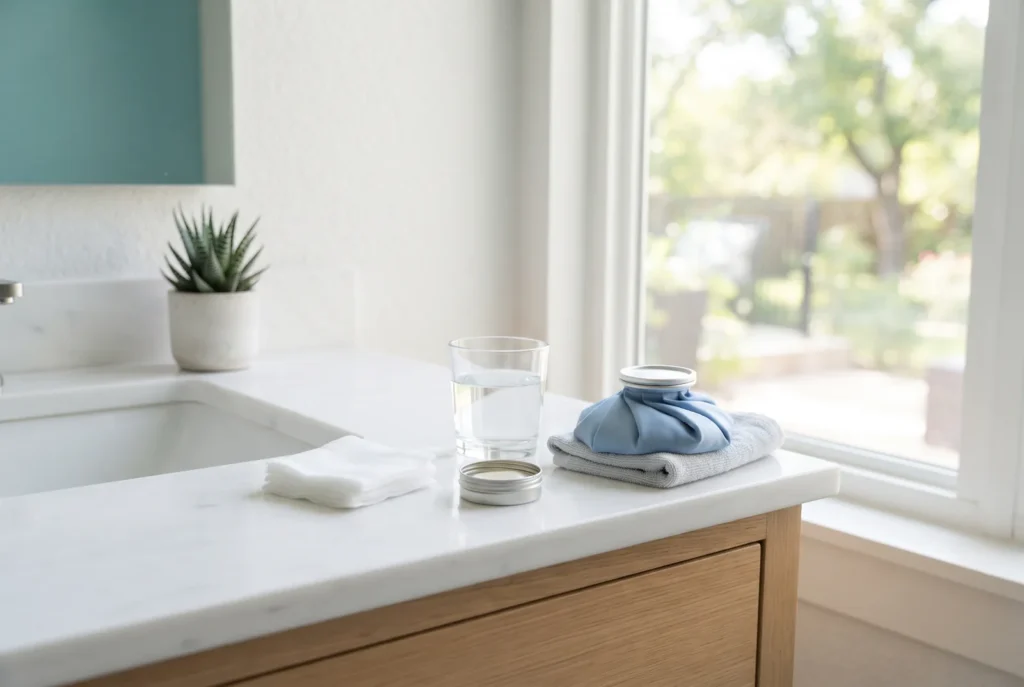
- Use a cold pack for swelling. Wrap it in a cloth and hold it on your cheek for 15 minutes at a time.
- Take an over-the-counter pain reliever if needed. Follow the label. Don't put aspirin directly on the gum.
- Call a dentist. Your regular dentist is a good first call. If they're closed or can't see you today, call an emergency dentist.
The American Dental Association gives the same basic advice for broken and cracked teeth.
What not to do
- Don't try to fix or cover the tooth yourself. Leave the repair to a dentist.
- Don't use glue of any kind on the tooth.
- Don't chew on that side. Eat soft foods and avoid very hot or cold drinks.
- Avoid hard or sticky foods like nuts, ice and caramel. A cracked tooth can split further.
How urgent is it?
See a dentist today if:
- There's a pink or red dot in the center of the break. That's the nerve showing.
- The tooth is loose, or the break goes below the gum.
- You have pain, or the tooth hurts with cold or when you bite.
- A sharp edge is cutting your tongue or cheek.
See a dentist soon if:
- It's a small chip that doesn't hurt. The missing enamel still leaves the tooth open to decay.
What to tell the dentist when you call
- Which tooth broke (front or back, upper or lower)
- How it happened, and when
- Whether you have the broken piece
- Whether you have pain, swelling or bleeding
- Any medicines you take, including blood thinners
This helps the office know how soon you need to be seen.
What happens at the visit
The dentist examines the tooth and takes X-rays to see how deep the break goes and whether it reached the nerve. Many repairs, like smoothing a chip, bonding or a crown, can be done at the same visit. If the nerve is damaged, the tooth may need a root canal first. If it can't be saved, it may need to be removed. Our broken tooth repair page explains these options.
Frequently asked questions
Can a broken tooth wait?
Try not to wait. A break that doesn't hurt still exposes the inside of the tooth to bacteria, and cracks can get bigger when you chew.
Should I keep the broken piece?
Yes. Rinse it, store it in milk, and bring it to your visit. The dentist will check whether it can be reattached.
Why does my broken tooth hurt with cold drinks?
Cold sensitivity often means the break has reached the inner layer of the tooth. Have it checked soon, and avoid cold foods and drinks on that side until then.
If you're in San Antonio
Our Stone Oak office is open 7 days a week, 8:00 AM to 8:00 PM, including weekends, with same-day visits and walk-ins welcome. Call (210) 807-8793. After 8:00 PM, a live person still answers and saves you the first 8:00 AM opening. The emergency exam and X-rays are $125.
The $125 covers the emergency exam and diagnostic X-rays. Any treatment is a separate fee, quoted to you in writing before any work starts.
For payment and insurance details, see our cost page. If the nerve is involved, our emergency root canal page explains that visit.
This article is for general education and is not a substitute for an exam by a licensed dentist.